Each model features identical core functionality: a rear-hand heating element, adjustable heat across three levels, and runtime spanning from 90 minutes at peak temperature to 6 hours on the lowest setting.
Five degrees on the thermometer, twenty-five kilometers per hour gusting across your skin. The numbers suggest a gentle morning. Yet what you feel in your hands tells a different story.
Cyclists don't simply check the weather on their device and adapt accordingly. Instead, they generate their own air movement through speed, and this self-created wind dramatically alters the riding experience. Consider the numbers: pedaling at 25 km/h when the ambient temperature sits at 5 °C effectively exposes your extremities to a wind chill of approximately 0.5 °C. Drop the mercury to 0 °C, and that same pace produces a wind chill sensation around -5.9 °C. The reality is stark—you needn't wait for subfreezing conditions to face cold-weather challenges. Your motion manufactures the chill itself.

While your legs are actively generating warmth through movement, your hands remain stationary on the handlebars, exposed directly to the wind. When your body prioritizes core heat retention, the hands are among the first extremities to experience reduced circulation. This dynamic—the interplay between stationary positioning, wind exposure, and your body's natural heat management—is what causes standard winter gloves to fail. After 30 to 40 minutes of riding, even quality gloves leave fingers feeling numb. In such conditions, ambient temperature readings become almost irrelevant; what truly matters is how much wind exposure your hands endure.
Why do your hands get cold before the rest of your body?
As your skin temperature decreases, your body responds with an instinctive and logical action: it restricts circulation to outer areas to safeguard your vital organs. Blood vessels in your extremities narrow, reducing circulation, and warmth ceases to distribute to regions that were previously receiving the most thermal energy.
Medical experts refer to this phenomenon as peripheral vasoconstriction, which intensifies during physical activity. When you're cycling hard, your cardiovascular system prioritizes blood flow to the muscles doing the work. This means your hands receive less circulation precisely when you depend on them most—for braking and controlling your gears.
This is the point where the most meaningful distinction emerges in our comparison, and we're not making a promotional claim here.
Conventional winter gloves don't create warmth—they merely trap the heat your body produces. Think of a thermos: it preserves existing heat but cannot warm something that's already cold. The challenge with cycling in frigid conditions is that your body restricts blood flow to your extremities. No matter how many insulating layers you add, you're only protecting hands that your body has already abandoned.
Heated gloves take a fundamentally different approach. Rather than simply trapping warmth, they actively generate it. This distinction—passive insulation versus active thermal output—represents a shift in philosophy, not merely a product variation. It's precisely why a slim heated glove can outperform a bulky traditional winter glove during a two-hour cycling excursion.

Choose based on your cycling style
These bicycles serve different riding styles and preferences. Learn how to pick the right one for your needs and avoid a costly mistake.
You ride for long periods, in all kinds of weather
When you're facing extended rides in unpredictable weather with a journey home as daylight fades, you need gear that performs across all conditions. The FLEX+ heated cycling gloves check every box for this demanding scenario: a waterproof and windproof barrier keeps your hands protected, while the textured silicone palm grip maintains traction even on wet bars. Reflective details ensure visibility during low-light returns. Beyond these essentials, the engineered flex zone is built for the repeated hand movements that happen naturally over hours in the saddle—thousands of flexes that would break down inferior materials. This is durability that lasts.
The insulation is rated 3 out of 5 by the brand. When paired with the heating system, it delivers reliable warmth suitable for winter riding across France. For particularly harsh conditions—whether in alpine terrain or extended time outdoors—explore our specialized heated apparel line built for extreme cold weather performance.

You take the same route every day
Daily commuting on two wheels demands a distinct approach: shorter distances traveled regularly, yet with persistent moisture exposure and minimal drying time between outbound and return journeys. The ACTIVE heated cycling gloves share the core engineering of our FLEX+ line—delivering identical waterproof performance and thermal insulation—while employing a streamlined design. The difference amounts to just twelve grams per glove.
Before you purchase, there's an important detail worth noting: this glove model requires hand-washing with clean water, unlike our alternative option which is compatible with machine washing at 30 °C. Given that these gloves are designed for everyday wear, the hand-wash requirement represents a genuine drawback. We believe it's better to highlight this upfront rather than have you discover it after your purchase.
Your hands are cold even when you’re not riding
Some individuals experience persistently cold hands well before winter weather becomes challenging for most people. If you're among them, what matters most isn't cycling performance—it's dependable, sustained warmth throughout your ride. The ACTIVE gloves deliver exactly that: their soft fleece lining provides insulation even when the battery runs out, a feature that proves invaluable during extended rides. We believe in transparency here: if your hands stay cold in all conditions, whether cycling or not, you may want to consider our heated gloves designed for Raynaud's disease, which address that specific sensitivity more effectively.

You’re cycling for twenty minutes around town
When taking short trips, packability and thermal protection carry equal weight: bulky gloves are difficult to carry and compromise dexterity. In this scenario, ACTIVE gloves offer the ideal balance—they're among the lightest waterproof options available, with a streamlined design that keeps packed weight minimal. Note that the heating element requires a brief warm-up period; activate them before departure rather than mid-ride. For even greater compactness, such as layering under mittens or transitioning between indoor and outdoor environments, the thin heated gloves provide an even slimmer profile. However, high-speed riding on electric bikes or scooters introduces different thermal demands; the RIDER heated motorcycle gloves are engineered specifically for sustained exposure at elevated velocities.
firoth Heated Cycling Gloves Buying Guide
Knowing what matters is essential when making a comparison. Learn which factors truly impact your decision and which ones you can safely ignore.
When it comes to heated gloves, performance isn't just about generating warmth—it's about maintaining consistent heat and preserving your ability to move freely. For cyclists especially, losing sensation in your hands isn't a minor inconvenience; it's a genuine safety concern that compromises your control over the brakes.
How do you choose between these two models?
Begin by assessing your riding environment and style, rather than focusing on technical specifications. A few key questions typically provide all the clarity you need.
1 .What's your typical time away from home? If you're out for short trips under forty minutes, lightweight design and insulation matter most. When you're spending more than an hour outside, focus shifts to battery longevity and water resistance.
2. Will you be riding in wet conditions? This is a key consideration, and fortunately both options deliver on this front: each is rated as waterproof, a feature that sets them apart in the heated glove category. However, the distinction goes deeper than surface-level design—we'll break down the specifics below.
3. Do your hands struggle in cold temperatures? When thermal comfort becomes your priority, your options become more limited.
4. Don't let these factors drive your decision: cost by itself, claimed battery duration, or the quantity of temperature levels—both options share identical specs in the latter two categories. It's akin to judging two vehicles by their fuel tank capacity when they're equipped with the same tank.
What criteria should you look at closely, beyond price?
Water-resistant and waterproof are distinct concepts that serve different purposes. Water-resistant fabrics cause moisture to form beads and shed from the surface, making them suitable for light rain but insufficient during prolonged downpours. Waterproof fabrics, by contrast, prevent water from penetrating under pressure. While ISO 811 and EN 343 standards exist to quantify this performance for rain-protective garments, they are not required certifications for sports gloves. The millimeter measurements commonly cited online represent manufacturer claims rather than independently verified specifications. When selecting gloves, prioritize the manufacturer's stated application and performance conditions over numerical claims alone.

How water compromises glove protection. The air pockets trapped within glove linings are poor heat conductors, which is their primary defense mechanism. Water, by contrast, transfers heat at rates twenty to twenty-five times faster. When a glove becomes wet, it doesn't merely reduce insulation—it fundamentally undermines the technology behind thermal protection. The damage extends beyond these figures: water compresses the insulating material and produces voids between your skin and the outer layer, accelerating heat loss even more severely.
Perspiration is equally important as rainfall when it comes to hand comfort. Releasing ten grams of perspiration over sixty minutes dissipates approximately 7 W of thermal energy from your hand, even without any precipitation present. An effective glove must therefore repel liquid moisture while simultaneously permitting water vapor to pass through—requirements that fundamentally oppose each other. This is why no single glove design can master both functions, and even a highly water-resistant pair can still result in interior dampness on your hands.
Grip and touchscreen functionality. Both styles feature touchscreen-enabled index and thumb fingers. The silicone palm grip on the FLEX+ gloves serves a dual purpose—it enhances comfort while providing the control needed to adjust braking pressure on wet handlebars. Touchscreen-capable fingers eliminate the need to remove your gloves at each stop, preserving the warmth you've built up over twenty minutes rather than losing it in thirty seconds. For winter accessories, these functional details often determine whether a product becomes an essential part of your routine or stays forgotten in a drawer.
Understanding Value in Heated Gloves. Comparing heated gloves to standard winter gloves isn't straightforward—they serve fundamentally different purposes. Rather than focusing on purchase price alone, consider the true cost per use: a heated glove that enables you to enjoy January outdoors delivers more value than a budget winter glove that keeps you confined indoors. Within our collection, price variations between models reflect differences in durability and protective features, not heating capability. This means you're investing in the right tool for your specific activity, not paying extra for thermal performance. To explore heated gloves without a significant commitment, our ESSENTIAL line offers an accessible entry point with proven versatility across different conditions.
When considering your budget across our product lineup, think about your specific needs and usage patterns. Entry-level options are designed for everyday wear and occasional short outings. Mid-range selections introduce enhanced water resistance and reinforced construction for added durability. Premium models focus on long-term value through improved grip, increased flexibility, and superior visibility—not additional warmth. The price differences reflect the quality of materials, construction methods, and how long the product will perform, not heating capacity. This distinction matters: many assume spending more buys greater warmth, but our lineup is engineered differently. Your choice should align with how you'll actually use the product and how long you expect it to last.
Master the use and care of your gloves
A quality heated glove can serve you reliably for many seasons when handled with care. Conversely, neglect and improper use often lead to disappointment within the first year—typically stemming from a handful of preventable mistakes.
Battery performance naturally declines in cold conditions, and no glove is immune to this effect. The key to keeping your outing enjoyable rather than cutting it short is simple: carry a spare pair with you at all times—keep them on your person, not tucked away in a bag.
How can you maximize battery life in cold weather?
The manufacturer's stated battery duration—approximately 1.5 to 2.5 hours at maximum output, and 5 to 6 hours at minimum output—should be understood as baseline estimates rather than guaranteed performance metrics. These figures typically do not account for environmental test conditions, and battery efficiency diminishes noticeably when exposed to cold temperatures. Real-world performance varies considerably: minor capacity loss occurs around freezing point, while substantially greater degradation happens in severe cold or windy conditions. Battery manufacturers publish inconsistent specifications across their datasheets, making it impractical to provide a standardized capacity reduction figure.
- When temperatures hover near freezing, performance degradation is manageable and easily compensated for. However, in severe cold combined with harsh winds, the impact becomes substantially more pronounced—and that's where real-world know-how outweighs spec sheets. Here are three straightforward approaches that deliver measurable results:
- Maintain consistent low-power operation rather than intermittent high-power cycles. A hand sustained at a steady, comfortable temperature draws significantly less energy than one requiring periodic reheating.
- Store your spare batteries in an inner pocket worn against your body. Batteries perform substantially better when kept warm compared to those exposed to cooler temperatures in a bag for extended periods.
- Avoid charging a battery while it remains frozen—always allow it to warm to room temperature first. Charging a battery in subzero conditions (below 0 °C) results in irreversible damage that cannot be undone.
- Good news, by the way: some of the capacity lost in cold weather isn’t destroyed—it’s just temporarily inaccessible. It returns once the battery warms up.
What maintenance is needed to make them last several seasons?
Start by taking out the batteries whenever you're ready to clean your gloves. The FLEX+ heated cycling gloves offer flexibility—you can wash them by hand or toss them in the machine on a gentle 30 °C cycle. The ACTIVE model takes a different approach and calls for a simpler method: just wipe the surface with plain water. This distinction matters more than you might think in day-to-day wear, and it's an important factor when weighing the cost between the two options.
Let them air-dry naturally—avoid radiators, dryers, or any direct heat source, as high temperatures can damage the internal membranes and compromise electrical components. When the season ends, keep your gloves in a dry environment with batteries charged to around 50% rather than completely depleted. Storing batteries in a fully discharged state for extended periods, such as six months, may result in permanent loss of charge capacity.
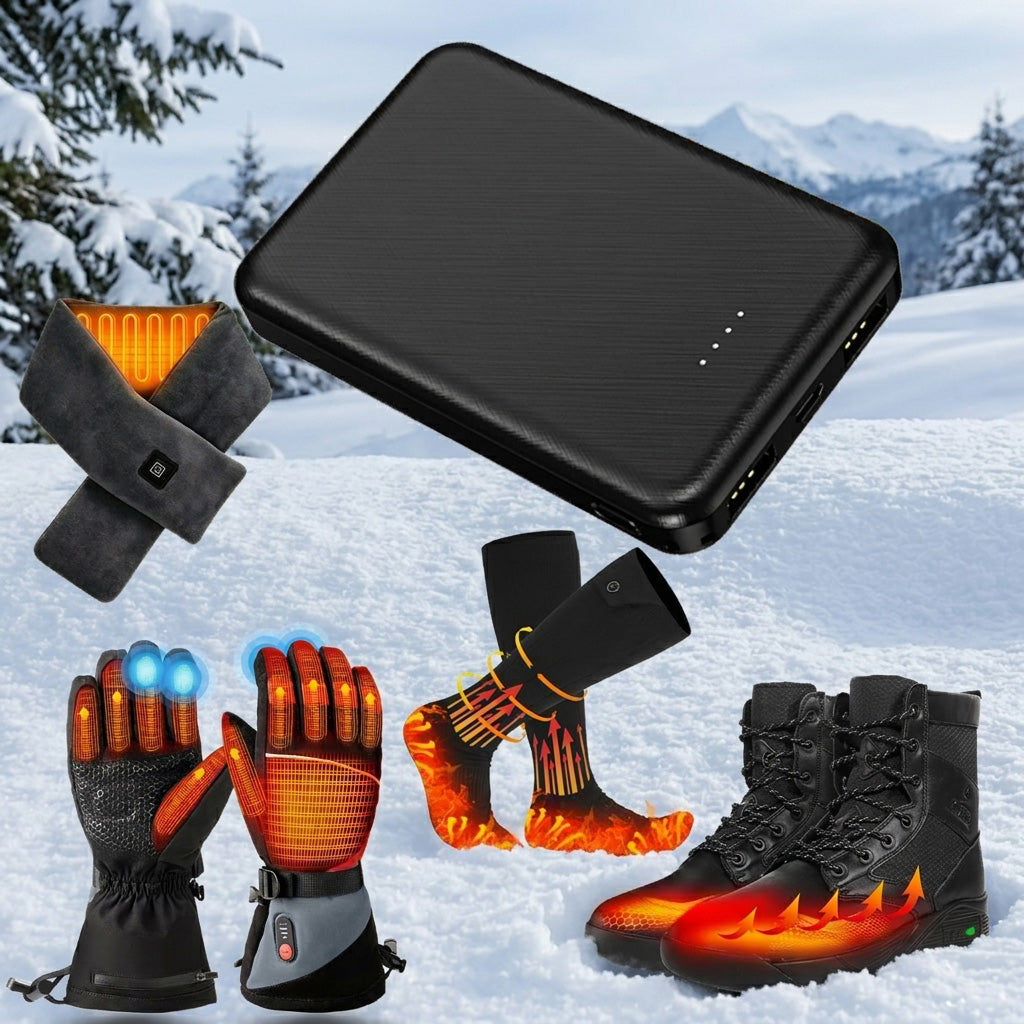
Let's not forget about the other end of the body—the part riders tend to overlook. Cyclist feet face the same physical demands as hands: locked in place within footwear, battling wind chill, and suffering from reduced blood flow. Performance heated socks address this problem elegantly, with no need to swap out your cycling shoes. For many riders, they deliver a bigger boost to overall ride comfort than upgrading to heavier-duty gloves.
Here's a final insight—and it might surprise you: if your hands remain cold even with heated gloves, the issue likely isn't your gloves at all. When your core body temperature drops, your body naturally restricts blood flow to your hands and feet as a survival mechanism, regardless of what insulation covers them. The real solution often lies in warming your torso with a heated layer—a heated vest, for example—which addresses what feels like a glove problem but is actually a core warmth issue. This same principle holds true for your feet, another area cyclists frequently overlook when troubleshooting cold extremities.
What these gloves don’t do—and what you need to know
A genuine comparison reveals gaps too. Here are three substantive points worth checking.
Our product specifications for these models intentionally avoid citing numerical waterproofness ratings, water column measurements, or textile certifications. Instead, we describe performance using the terms "waterproof" and "water-repellent" without attaching them to specific metrics. We do not convert these descriptors into numbers because doing so would not establish any legally binding guarantee—and competitors who cite millimeter values do not create such guarantees either.
Many manufacturers don't reference the EN 511 standard, which is Europe's benchmark for cold-weather protection. Understanding what this certification actually covers is essential before relying on it. EN 511 evaluates resistance to convective and contact cold, along with water resistance tested over 30 minutes. However, it provides no assurance of a minimum operating temperature or how long protection lasts. Even gloves marked with EN 511 won't specify the coldest conditions in which you can safely ride.
Before selecting your glove size, be sure to take accurate measurements. Measure around your palm (excluding your thumb) while your hand is relaxed, positioning the tape at your knuckles. Additionally, measure the full length of your hand from wrist to fingertip, as a glove can fit well around the palm but still fall short in length. When you find yourself between two sizes, opt for the roomier option to avoid an uncomfortable, restrictive fit.
Conclusion
When you're logging extended hours in variable weather conditions, the FLEX+ heated cycling gloves stand out as the most well-rounded option—delivering the rare combination of superior grip, responsive flexibility, and enhanced visibility in a single design. If your routine centers on a daily rain commute, the ACTIVE gloves deliver comparable weather protection through a streamlined construction, though they do require attentive upkeep. The final decision hinges on balancing two key practical factors: the silicone grip surface paired with reflective detailing on one side, versus the convenience of low-maintenance care on the other.
Keep this fundamental principle in mind: your hands become cold not from insufficient glove insulation, but from reduced blood circulation to your extremities. Heat generation addresses this issue directly. Simply increasing material thickness does not.
Before making your final decision, remember this: heated cycling gloves are not a substitute for proper winter apparel—they fill a gap that regular clothing simply cannot. When facing harsh winter conditions, layering with appropriate thermal wear alongside heated gloves is essential. Browse our complete cycling thermal clothing selection to find the perfect combination, and don't hesitate to reach out if you need help deciding between options.
FAQ
What is the best firoth heated cycling glove in 2026?
No single model stands out as superior since both deliver comparable thermal performance. However, when facing challenging cycling environments, the FLEX+ heated cycling gloves emerge as the more versatile choice—they uniquely integrate waterproof construction, silicone-enhanced grip, articulated design panels, and reflective accents into one offering.
What size of heated gloves should you choose?
Wrap a measuring tape around your palm with your fingers relaxed, keeping your thumb out of the measurement. Note your hand length as well. When deciding between two sizes, opt for the larger fit: gloves that are too snug can impede blood flow and compress the insulating material, causing you to lose warmth more quickly and draining the battery faster.
How long do heated cycling gloves typically last?
The battery delivers approximately 5–6 hours of runtime at the lowest power level, 3–4 hours at medium power, and 1.5–2.5 hours at the highest setting. Performance diminishes in cold conditions, consistent with standard battery behavior. For extended rides, your best strategy is to maintain a steady pace on the lower setting and keep a spare battery set at a comfortable temperature.
Are heated gloves waterproof in the rain?
The FLEX+ and ACTIVE heated cycling gloves are marketed as waterproof, yet water-resistant fabrics offer limited protection—they can shed brief rainfall but fail during extended exposure. Industry standards like ISO 811 and EN 343 provide measurable benchmarks for water resistance and rain gear classification, though neither applies mandatorily to sports gloves. firoth does not disclose these performance metrics. Without concrete specifications, prioritize the documented intended use over promotional language when evaluating water protection.
Does a heated glove replace a thick winter glove?
They fulfill distinctly different functions. A traditional winter glove works by trapping warmth already present, whereas a heated glove actively produces its own heat. Because extreme cold constricts blood vessels and diminishes circulation to the fingertips, passive insulation can only do so much for extremities the body has stopped warming naturally. This is precisely why a lightweight heated glove often outperforms a conventional, substantially bulkier glove.
Why doesn’t the palm of heated gloves get warm?
There are three key reasons for this design. First, applying heat to the back of the hand effectively warms the blood circulating to your fingers, keeping them warm throughout use. Second, the palm needs to stay flexible and maintain its grip on the handlebars while allowing you to operate the brakes with precision. Third, constantly bending the palm would damage the heating element underneath. This back-of-hand approach is a deliberate design decision made for functionality and durability, not simply to reduce costs.
Are heated gloves really effective for sports activities?
Absolutely, provided you understand their intended purpose and limitations. These devices deliver heat to areas where your body's natural warmth has diminished—a capability that passive insulation cannot replicate. That said, they won't overcome poorly chosen clothing or the discomfort of an ill-fitting glove that restricts circulation. When it comes to winter sports performance, success relies equally on proper sizing, consistent use at a lower power level, and selecting the right model for your needs.
Do you need to recharge the batteries after every outing?
While not strictly necessary, it's best to avoid keeping batteries in a fully depleted state during storage. More importantly, always allow a cold battery to warm up to room temperature before charging—attempting to charge below 0 °C can cause permanent damage to the battery's capacity.